What Is the Mind? — The Quiet Answers Philosophy Has Built Up: Chapter 2 Can the Soul Separate from the Body?
日本語 | English | 繁體中文 | 簡体中文 | 한국어 | Tiếng Việt
Hello everyone. This is Akira.
In the previous chapter, we began tracing the question “What is the mind?” through the history of philosophy and touched on Plato’s Phaedo.
In this chapter, let’s carefully examine the core idea of this dialogue:
——Can the soul separate from the body?——
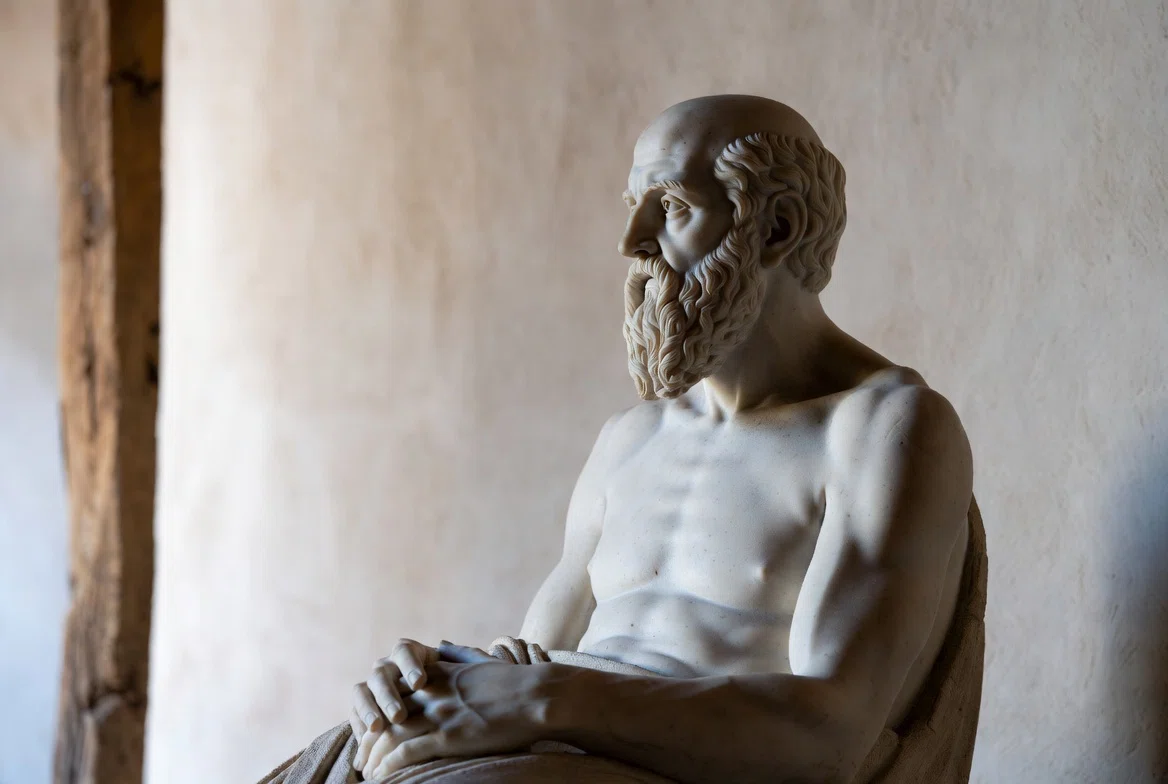
Phaedo is a record of the dialogue Socrates had with his disciples on the day his death sentence was to be carried out.
In the prison, even with death before him, Socrates continues to speak calmly.
The first thing he talks about is the definition that death is the separation of the soul from the body.
The body is an entity easily bound by sensation, desire, pain, and pleasure.
On the other hand, Socrates believes that the soul can separate from such physical constraints and purely “think” — it has the power to turn toward unchanging things such as beauty itself or justice itself.
From this idea comes the famous saying, “Philosophy is a practice for death.”
Socrates says that a philosopher is someone who practices gradually separating the soul from the body while still alive.
Not being swayed by things the body seeks — food, ornaments, fame — and concentrating on thought.
Not being swallowed by waves of desire and keeping the mind calm — this was considered training to prepare for the separation called death.
Why was such separation thought to be possible?
According to Plato, the soul has a different nature from the body.
While the body constantly changes and is fragile, the soul is said to have a high affinity with eternal, unchanging things (the Ideas).
Even while the soul is dwelling in the body, in moments of pure thought, it already feels as if it has separated from physical constraints — based on such experiences, Socrates speaks of the possibility of separation.
This ancient way of thinking may feel distant to us today.
However, let’s shift our perspective slightly.
In modern daily life, various “physical and external stimuli” — smartphone notifications, work pressure, the troubles of human relationships — constantly shake the mind.
The state in which the brain is exhausted and feels “I don’t want to think about anything anymore” can be said to be exactly when the mind is trapped by the clamor of the body and the outside world.

In such moments, the act of intentionally “creating a little distance” — turning off notifications, blankly staring in a quiet place, temporarily detaching consciousness from the task in front of you — may function as a modern version of the “practice of separation” that Socrates spoke of.
By distancing the mind a little from the demands of the body and the outside world, we can create a quiet space inside ourselves.
That space is what connects to the “sacred blank space” we touched on in the previous chapter.
Of course, the separation of the soul that Plato spoke of is discussed in a context different from modern brain science and psychology.
However, as a practical wisdom of “preventing the mind from being swallowed too much by external stimuli,” it is an idea that still holds sufficient meaning today.
In the next chapter, we will delve deeper into the possibility of “the soul separating from the body,” and examine why the soul can know “eternal things” — focusing on Plato’s theory of recollection.
Please look forward to it!
Akira
👤 Profile: https://discipline.tokyo/profile.php
📮 Anonymous Consultation Form: https://discipline.tokyo/contact.php
📚 All Activities Summary: https://discipline.tokyo/index.php
※ This series and related content are the crystallization of my thoughts and are protected by copyright law. Please clearly indicate the source when quoting. Unauthorized reproduction or commercial use is prohibited.
© 2026 Akira All Rights Reserved.

QRコードで即追加 → 秘密の回廊が開く