“Eastern Philosophy” — Does Japan Belong There Too?: Chapter 3
Does Japanese Thought Fit Neatly into That Box?
~What Are We Making Invisible?~
*This series is planned to be completed in 6 chapters.
日本語 | English | 繁體中文 | 簡体中文 | 한국어 | Tiếng Việt
Hello everyone. This is Akira.
In the previous chapter, we looked at the contents that are commonly placed inside the large box called “Eastern philosophy.”
Confucius’s Confucianism, the Daoism of Laozi and Zhuangzi, and the teachings of the Buddha.
These are often spoken of as representatives of “the East.”
So, does Japanese thought fit neatly into this box?
From here, I would like to quietly observe the Shinto sensibility and how Buddhism changed after arriving in Japan.
First, Shinto.
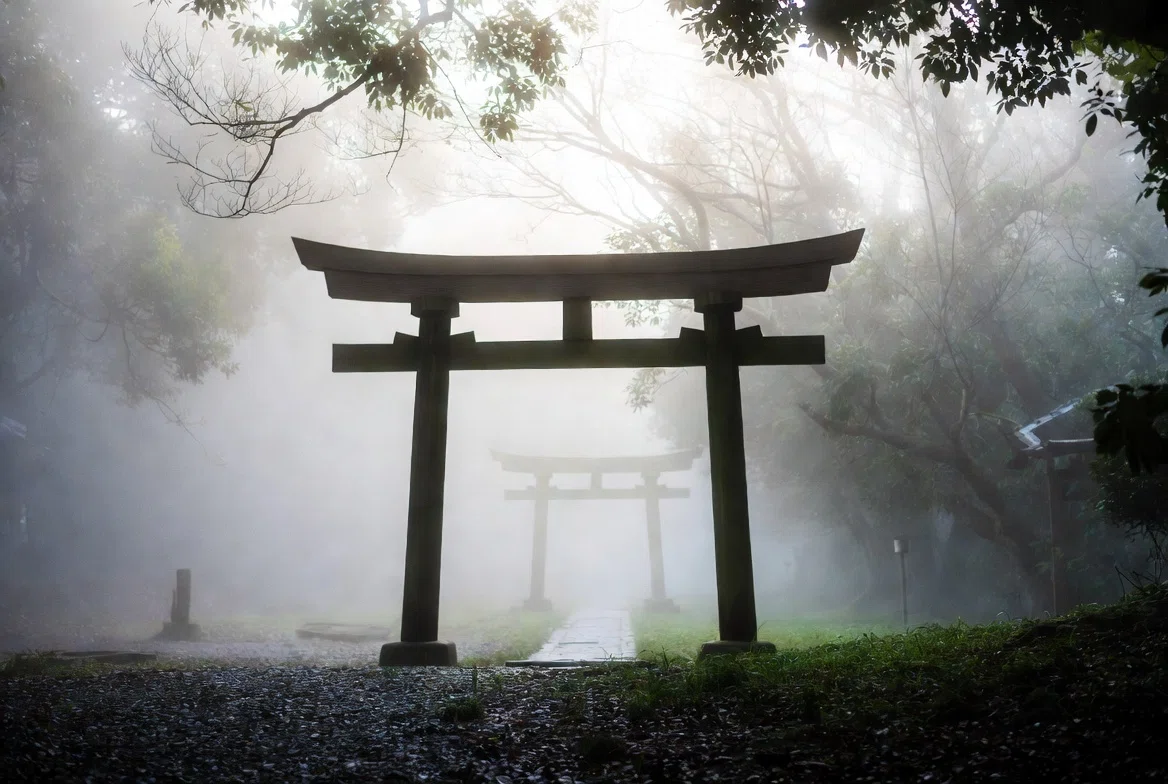
Shinto does not deny this world.
It has a strong sense of receiving the nature that is here and now, and the everyday activities themselves, as sacred.
There is purification of impurity and restoration of purity, but it rarely says “let us leave this world.”
It affirms reality and values how one exists within this world.
Such an affirmation of reality seems to lie at the root of Shinto.
Next, Buddhism.
Buddhism, born in India, originally had a strong awareness of “how to become free from suffering.”
It aimed to end the suffering felt through repeated rebirths and to reach a state where the mind is calm and free, it is said.
That direction was clearly present at the starting point.
However, after Buddhism was transmitted to Japan, its center of gravity gradually shifted.
In Japan, for a long time, Buddhism coexisted with Shinto in the form of shinbutsu-shūgō (the amalgamation of kami and buddhas) rather than opposing it.
Rather than “transcending this world,” “how to live within this world” came more to the forefront, it seems to me.
For example, in Jōdo Shinshū, rather than trying to become perfect through one’s own power, the idea of being saved “just as one is” is valued.
It is a direction of accepting, without denial, the self that lives in this world while remaining incomplete.
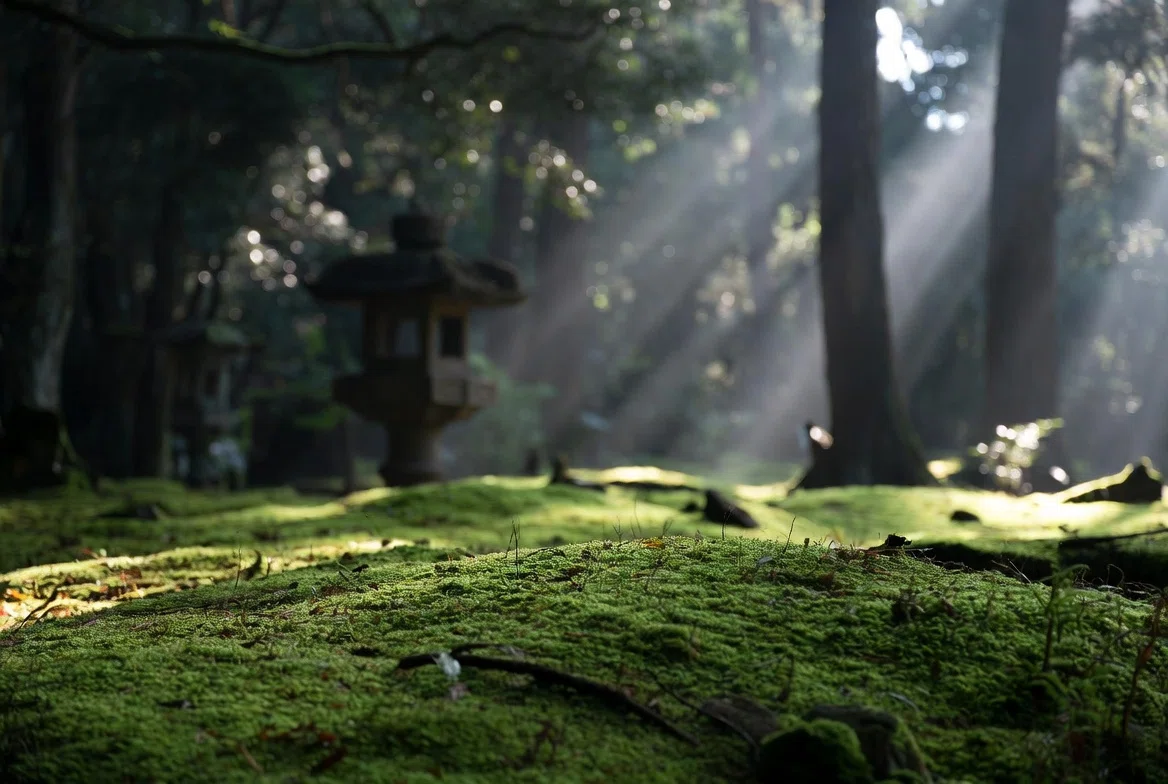
Zen also values “this very moment.”
Rather than reaching a special state, the way of clarifying the mind within the everyday movements of the hands and feet is emphasized.
While the Buddhism spoken of in India and China placed weight on ending suffering, the Buddhism nurtured in Japan appears to have shifted its center of gravity to how one receives and lives within this world that includes suffering.
Even though they are grouped under the same word “Buddhism,” the impression is quite different.
Here, let us recall once more the common characteristics attributed to “the East.”
The West tries to understand the world by breaking it down.
The East tries to understand it through connection and harmony.
Does Japanese thought truly fit this organization?
The Shinto sense of “affirming this world” feels a little different from being summarized by the word “harmony.”
It seems closer to a concrete sense of valuing the nature and daily life that are right here and now.
Japanese Buddhism, too, appears to place its center of gravity not so much on “liberation from suffering” as on “how to receive and live within this world.”
If we summarize everything with large words like “connection” or “harmony,” doesn’t the unique contour of Japanese thought become a little blurred?
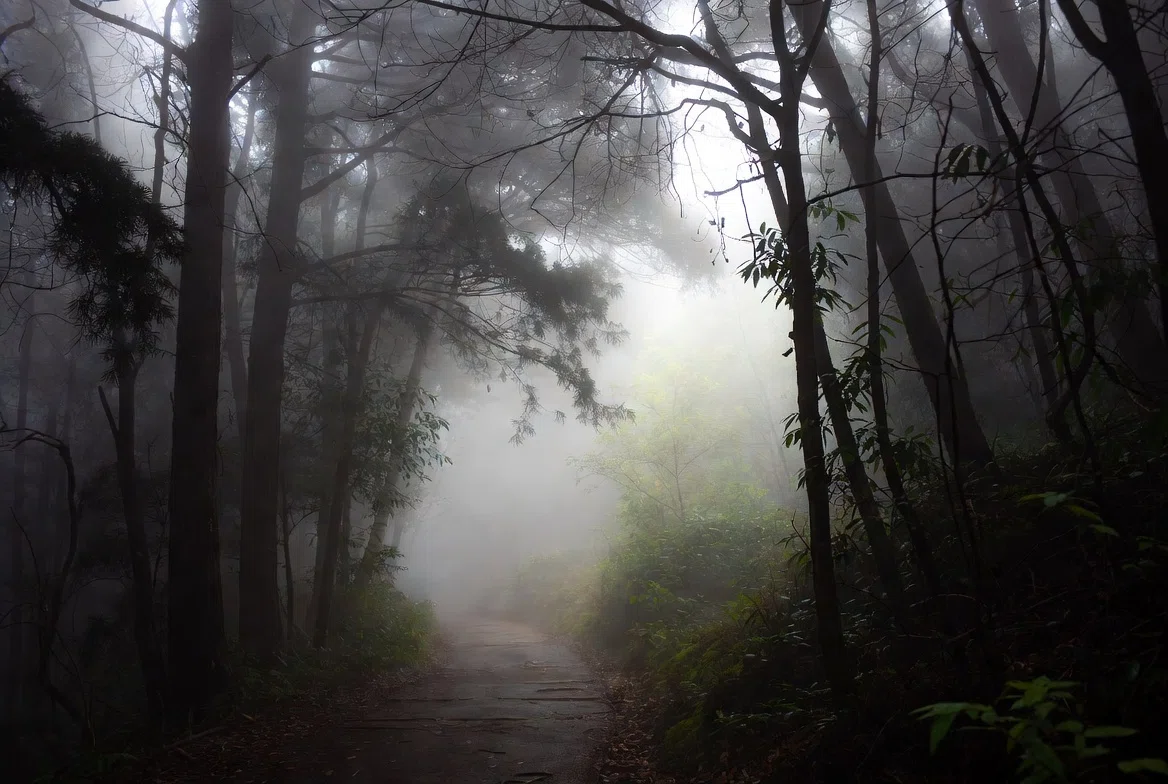
What I wanted to say in this chapter is a quiet sense of discomfort with simply summarizing “Japan is Eastern, so it is the same.”
Both Shinto and the Buddhism nurtured in Japan, when forcibly pushed into the box of “Eastern philosophy,” seem to let something important spill out.
So, how did modern Japanese thinkers handle this problem?
Did people such as Nishida Kitarō, Watsuji Tetsurō, and Kuki Shūzō think within the frame of “the East”?
Or did they think while slightly overflowing from that frame?
In the next chapter, I would like to look at that point.
Please look forward to it!
Akira
👤 Profile: https://discipline.tokyo/profile.php
📧 Email: akira@discipline.tokyo
📮 Anonymous consultation form: https://discipline.tokyo/contact.php
📚 All activities: https://discipline.tokyo/index.php
※ This series and related content are the crystallization of my thoughts and are protected by copyright law. Please clearly indicate the source when quoting. Unauthorized reproduction or commercial use is prohibited.
© 2026 Akira All Rights Reserved.

QRコードで即追加 → 秘密の回廊が開く